
On January 1, 2026, Belgium officially entered a new era of digital invoicing.
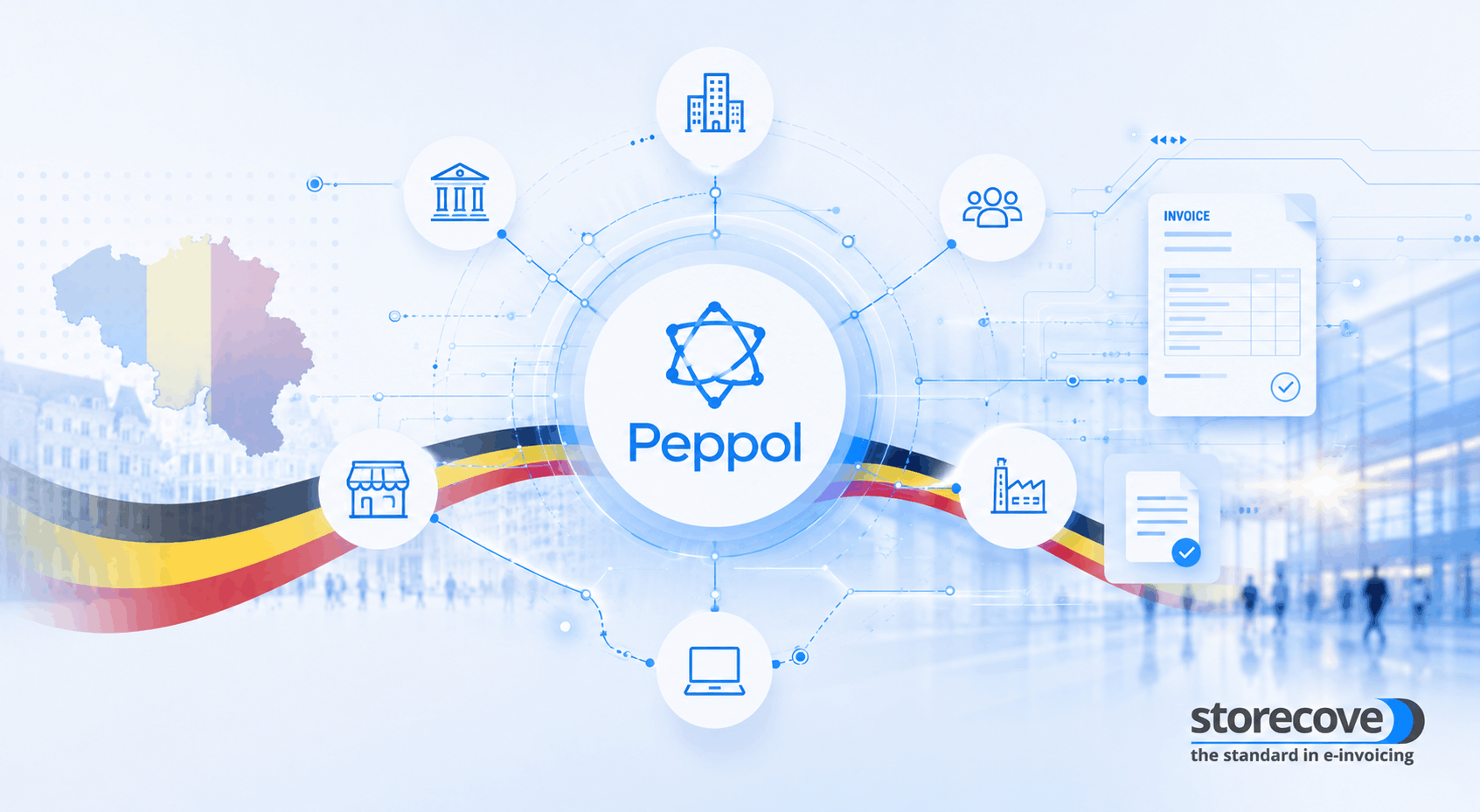
The country's long-awaited B2B e-invoicing mandate came into effect, requiring VAT-registered businesses to exchange structured electronic invoices. At the center of the mandate is Peppol, the interoperability network that now serves as the foundation for invoice exchange across Belgium.
In the months leading up to implementation, much of the discussion focused on preparation. Businesses evaluated providers, assessed their systems, onboarded suppliers, and worked to understand how the mandate would impact their operations.
Now, six months later, the conversation is changing.
At Storecove, we are seeing businesses shift their focus from compliance readiness to long-term optimization. The question is no longer whether organizations are prepared for Belgium's Peppol mandate. The question is what businesses are learning from operating in a fully mandated Peppol environment and how those lessons can help shape future e-invoicing strategies.
Belgium's Peppol-First Approach
Belgium's decision to build its mandate around Peppol reflects a growing trend toward interoperability and standardization.
Rather than creating a standalone national platform, Belgium chose to leverage an established framework used by governments and businesses worldwide. Through the Peppol network, organizations can exchange structured invoice data using common standards and protocols, creating a more efficient and connected ecosystem. This approach provides several advantages.
Businesses are not locked into a single government-operated platform. Service providers can continue innovating while operating within a common framework. Most importantly, organizations gain access to a growing network of trading partners that can exchange invoices electronically using standardized formats.
As a Peppol Access Point, Storecove has seen firsthand how this model helps reduce complexity for businesses operating across multiple markets. Rather than building separate connections for different countries and networks, organizations can increasingly leverage interoperable infrastructure that supports both current and future compliance requirements.
Belgium's decision is another example of why Peppol continues gaining momentum globally.
The Biggest Lesson: Peppol Is About More Than Compliance
When Belgium's mandate was first announced, many organizations viewed it primarily as a compliance project.
The goal was simple: meet the requirement and avoid disruption.
However, six months into the mandate, businesses are beginning to realize that Peppol offers benefits that extend far beyond regulatory compliance. Structured invoice exchange creates opportunities to improve efficiency throughout accounts payable and accounts receivable processes. Information arrives in a standardized format, reducing manual intervention, improving data accuracy, and supporting automation initiatives.
At Storecove, we've seen many customer conversations evolve in exactly this way. What often begins as a discussion about compliance quickly expands into conversations about workflow optimization, operational efficiency, and digital transformation. Once organizations begin exchanging structured invoice data through the Peppol network, they frequently identify opportunities to streamline processes that previously relied on manual handling. The result is a stronger business case for e-invoicing that extends beyond simply satisfying a mandate.
Supplier and Customer Adoption Remains Critical
One of the most important lessons emerging from Belgium's rollout is that successful e-invoicing strategies require more than technical connectivity. Businesses also need participation from suppliers and customers.
Organizations that approached the mandate as a company-wide initiative often experienced smoother transitions than those that treated it solely as a technology project. Finance teams, procurement departments, IT professionals, and external partners all play an important role in creating a successful e-invoicing ecosystem.
For many businesses, supplier onboarding has become just as important as system implementation. The companies seeing the greatest success are often those that invested time into educating trading partners, communicating expectations, and building processes designed for long-term adoption. Technology creates the connection, but collaboration drives success.
Why Businesses Are Looking Beyond Country-Specific Solutions
Belgium's mandate has also highlighted a challenge many multinational organizations are already facing. Businesses rarely operate in just one market.
Today, organizations may be managing e-invoicing requirements in Belgium while simultaneously navigating mandates in Italy, Poland, and other countries. Many are also preparing for upcoming requirements in France and monitoring developments in the United Kingdom. Managing separate compliance solutions for every country quickly becomes difficult.
This is why interoperability has become one of the most important topics of conversation in the e-invoicing industry. At Storecove, we consistently hear from organizations seeking to simplify compliance across multiple jurisdictions. Businesses want solutions that support growth without requiring entirely new implementations whenever a new mandate is introduced.
Belgium's Peppol framework demonstrates the value of a standardized approach. As more countries embrace interoperability and common standards, organizations can increasingly leverage centralized infrastructure that supports multiple compliance frameworks.
The UK's recent decision to adopt Peppol as the foundation of its future e-invoicing framework only reinforces this trend.
What Storecove Is Seeing in Belgium
Six months after the mandate went live, several themes have emerged across customer conversations. Businesses are looking for simplicity.
They want visibility into invoice exchange processes. They want reliable connectivity with trading partners. They want scalable solutions that can support future requirements. Most importantly, they want to reduce complexity.
At Storecove, we've seen growing interest in:
- Expanding Peppol adoption across supplier and customer networks
- Increasing automation within accounts payable and accounts receivable workflows
- Improving invoice visibility and tracking
- Building scalable compliance strategies that can support future mandates
- Leveraging interoperability to reduce the burden of country-specific implementations
These priorities demonstrate how quickly the conversation has evolved beyond basic compliance. Businesses are no longer asking how to meet the Belgian mandate. They are asking how to maximize the value of their e-invoicing investments.
What Belgium Can Teach the Rest of Europe
Belgium's implementation provides valuable lessons for countries still progressing through their own e-invoicing journeys.
The success of the Belgian model demonstrates that governments can encourage digital transformation while leveraging existing interoperability frameworks rather than creating entirely new systems. It also reinforces the growing importance of standardization.
Across Europe, initiatives such as VAT in the Digital Age (ViDA) continue promoting greater interoperability and consistency between member states. While each country maintains its own requirements and implementation timeline, the broader direction is becoming increasingly clear.
Looking Towards the Future
Six months after implementation, Belgium's Peppol mandate is proving to be about much more than compliance. It represents a shift toward standardized data exchange, greater automation, and more connected business processes. Organizations that have embraced these opportunities are beginning to see benefits that extend well beyond meeting regulatory obligations.
At Storecove, we believe Belgium is offering an early glimpse into the future of e-invoicing. As more countries continue adopting Peppol-based frameworks and interoperability initiatives gain momentum, businesses will increasingly benefit from solutions that prioritize connectivity, scalability, and simplicity.
The organizations that view Belgium not as a compliance deadline, but as the beginning of a broader digital transformation journey, will be best positioned for long-term success. And if the first six months are any indication, Peppol will continue to play a central role in that future.
Read More
 Lauren Kelly
 Lauren Kelly
 Lauren Kelly

Comments