
While early European discussions around mandatory electronic invoicing focused heavily on pioneer markets, Ireland quietly mapped out one of the most structured digital tax transformations in the European Union. Following detailed public consultations, the Irish Revenue Commissioners (Na Coimisineirí Ioncaim) published the official VAT Modernization Roadmap. This comprehensive reform transitions the Irish economy from a voluntary e-invoicing model into a mandatory, real-time digital transaction control regime. Designed to close an estimated €1.7 billion national VAT gap while aligning directly with the European Union’s broader VAT in the Digital Age (ViDA) framework, Ireland's roadmap introduces mandatory structured B2B electronic invoicing alongside near-real-time digital tax reporting. For enterprises operating across Ireland, conventional PDF attachments and paper invoices will officially lose legal validity, making early technical preparation essential for supply chain continuity.
The Three-Phase Rollout Strategy
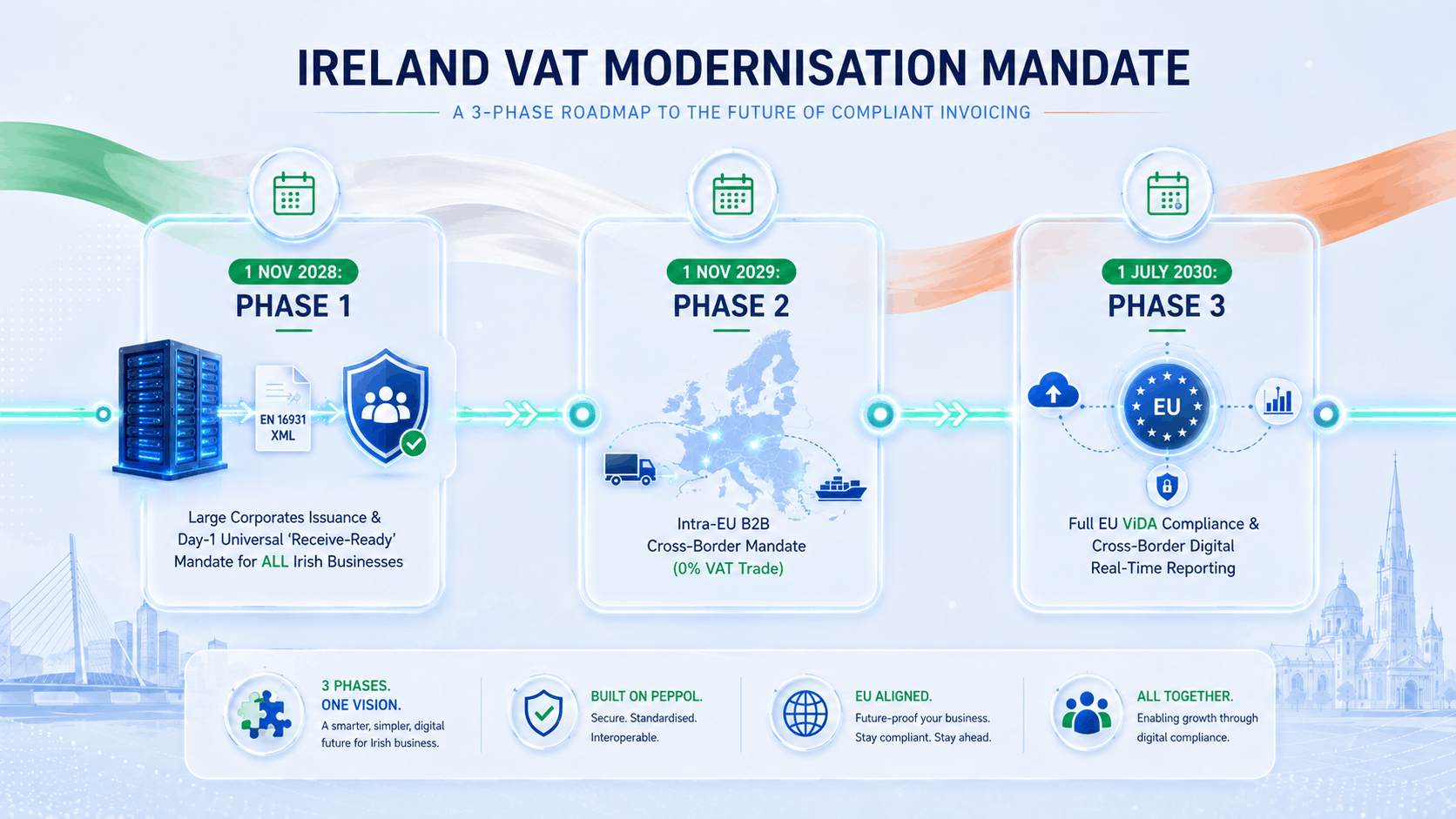
To prevent systemic market disruption, Irish Revenue designed a phased rollout that requires large corporate entities to lead the technical transition before obligations expand to cross-border and mid-market commercial operations. Phase 1 officially begins on 1 November 2028, making B2B e-invoice issuance and near-real-time digital tax reporting mandatory for all large corporate taxpayers managed by Revenue’s Large Corporates Division. Crucially, Phase 1 introduces a universal "Receive-Ready" mandate on the exact same date. This rule requires every VAT-registered business in Ireland, regardless of size or whether it is obligated to issue e-invoices, to have the technical capability to receive, parse, and process structured electronic invoices from large suppliers on Day 1.
Phase 2 takes effect on 1 November 2029, expanding mandatory e-invoice issuance and reporting to all Irish VAT-registered businesses engaged in intra-EU cross-border trade. This phase ensures that enterprises benefiting from 0% VAT cross-border provisions transition smoothly to digital reporting before full European harmonization. Finally, Phase 3 launches on 1 July 2030, bringing Ireland into complete alignment with the EU ViDA directive. At this point, digital transaction reporting and structured electronic invoicing become mandatory across all member states for cross-border EU business-to-business commerce.
Technical Standards & The Peppol Framework
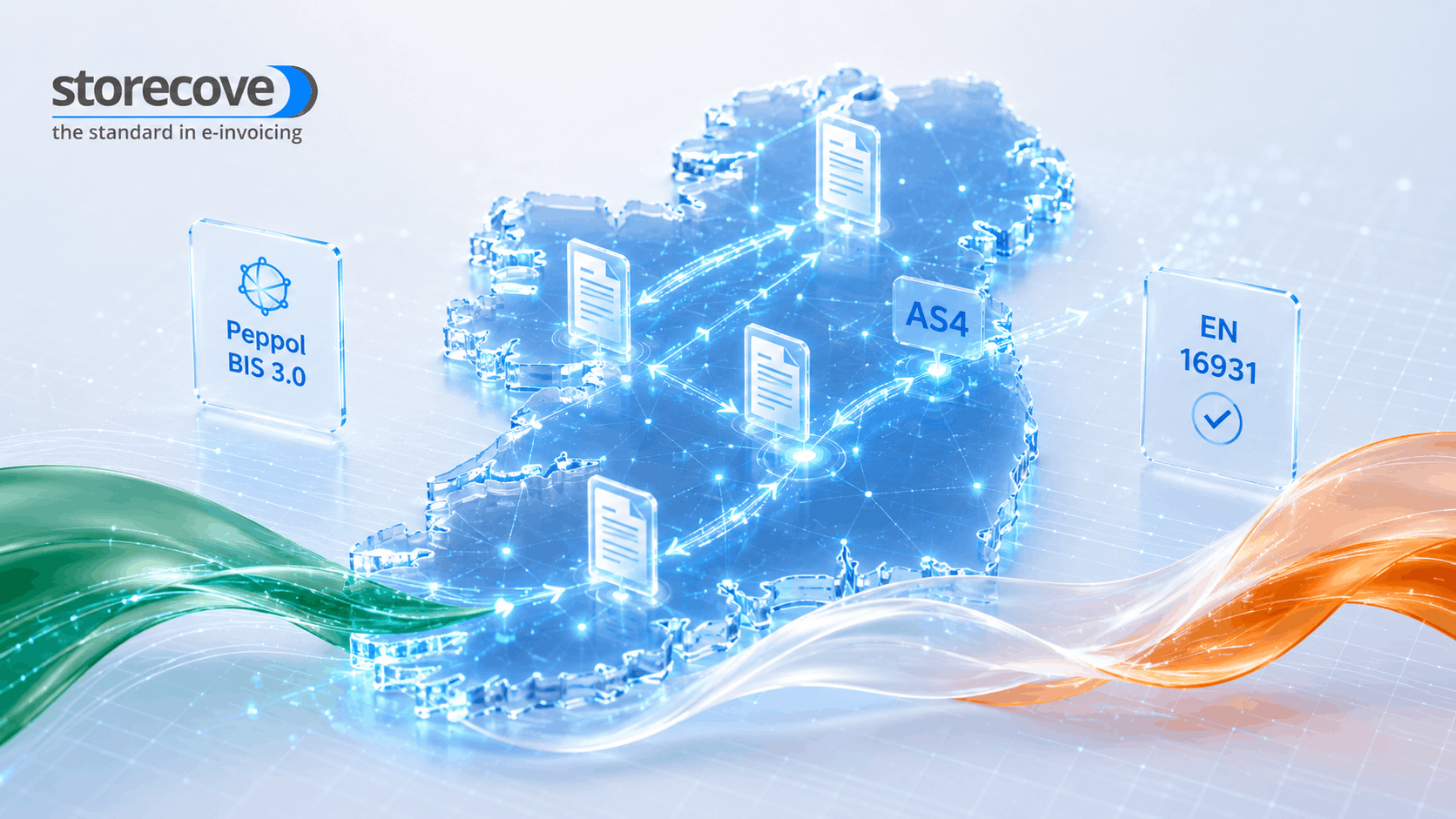
To eliminate the operational friction associated with centralized government clearing portals, Ireland builds its B2B framework upon established public procurement infrastructure. Under Irish Revenue guidelines, invoices must be formatted as structured, machine-readable electronic data files that conform directly to the European semantic norm EN 16931, using UBL 2.1 syntax. Traditional scanned paper documents, email attachments, and unstructured flat PDFs will no longer satisfy VAT compliance requirements. Invoices transmitted across the network will utilize the standard Peppol Business Interoperability Specifications (BIS) Billing 3.0 framework, incorporating localized Irish extensions where required.
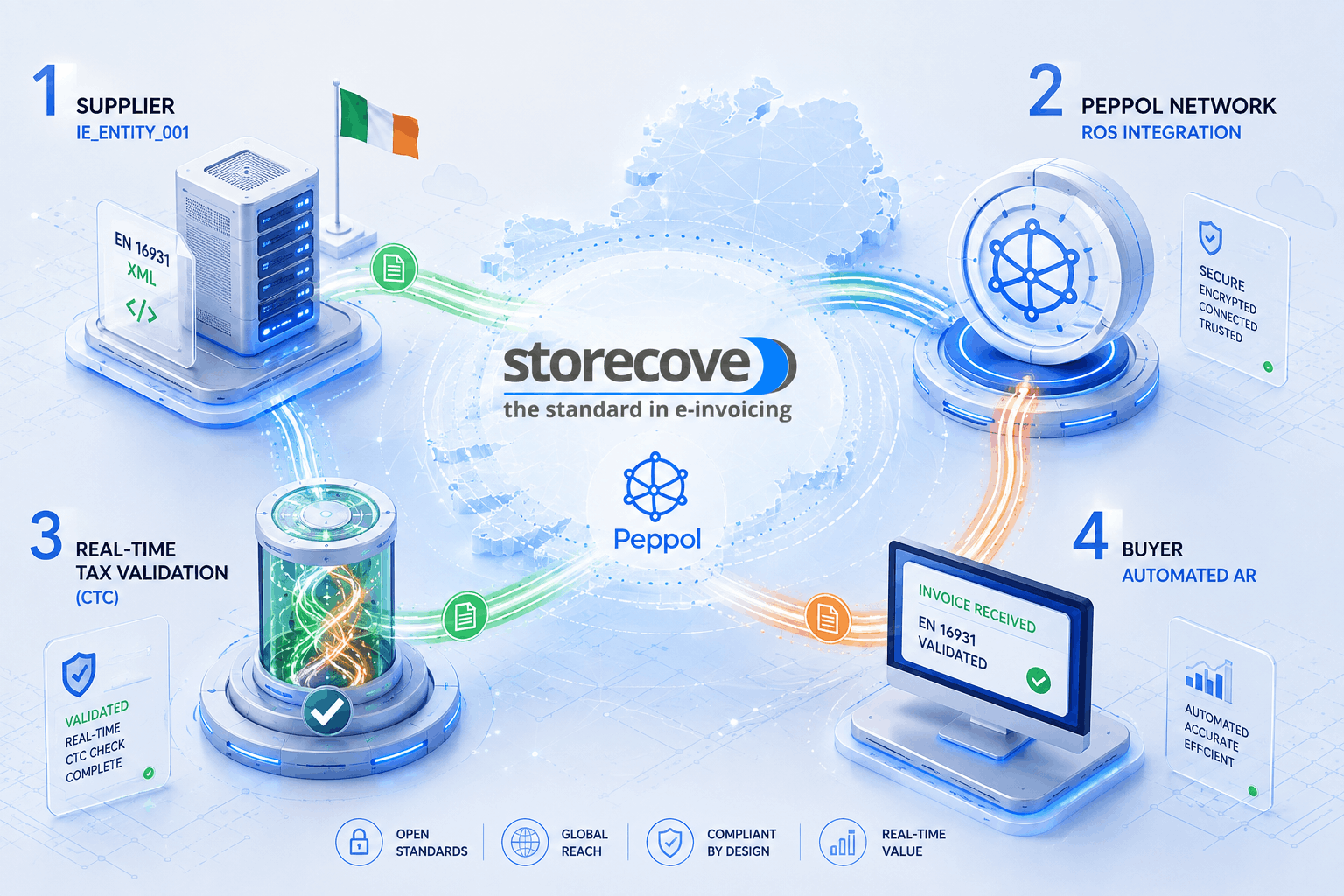
Ireland avoids relying on a single, centralized approval process for commercial invoices by implementing a decentralized Peppol four-corner model. In this setup, the seller sends a structured e-invoice directly from their accounting or ERP system to an accredited Peppol Access Point. This Access Point verifies the EN 16931 schema and securely forwards the invoice to the buyer’s Access Point via encrypted AS4 protocols. At the same time, a designated portion of the transaction tax data is automatically reported to the Irish Revenue Commissioners' digital portal to meet Continuous Transaction Control requirements.
Operational Preparation & System Readiness
Although 2028 may seem distant on a strategic planning calendar, the universal receipt obligation means accounts payable and procurement teams cannot treat this project as a distant priority. Enterprise IT and finance leaders must immediately audit current Enterprise Resource Planning platforms to ensure accounting software can ingest, validate, and auto-match structured XML payloads without relying on optical character recognition tools built for flat PDFs. Additionally, organizations must clean up customer and vendor master data files by validating Irish VAT identification numbers, PPSN/TRN details, and Peppol Participant IDs across all trading partner registries.
Streamlining Ireland E-Invoicing Compliance with Storecove
Navigating Ireland’s VAT Modernization Roadmap does not require rebuilding internal financial databases or maintaining custom connections to Irish Revenue endpoints. As a certified global Peppol Access Point provider, Storecove provides a single RESTful API connection that bridges your existing billing and accounts payable systems directly into Ireland's evolving e-invoicing ecosystem.
Through this integration, Storecove automatically converts raw billing payloads from your ERP into fully compliant EN 16931 UBL 2.1 XML schemas tailored for Irish trade. The platform effortlessly manages the dual-dispatch workflow—routing outbound B2B e-invoices across the secure Peppol network to commercial buyers while automatically transmitting required tax reporting payloads directly to Irish Revenue. By connecting once to Storecove, global enterprises unlock automated compliance across Ireland, the UK, France, Germany, Belgium, and over 30 global tax jurisdictions worldwide.
Read more
 Lauren Kelly
 Lauren Kelly
 Lauren Kelly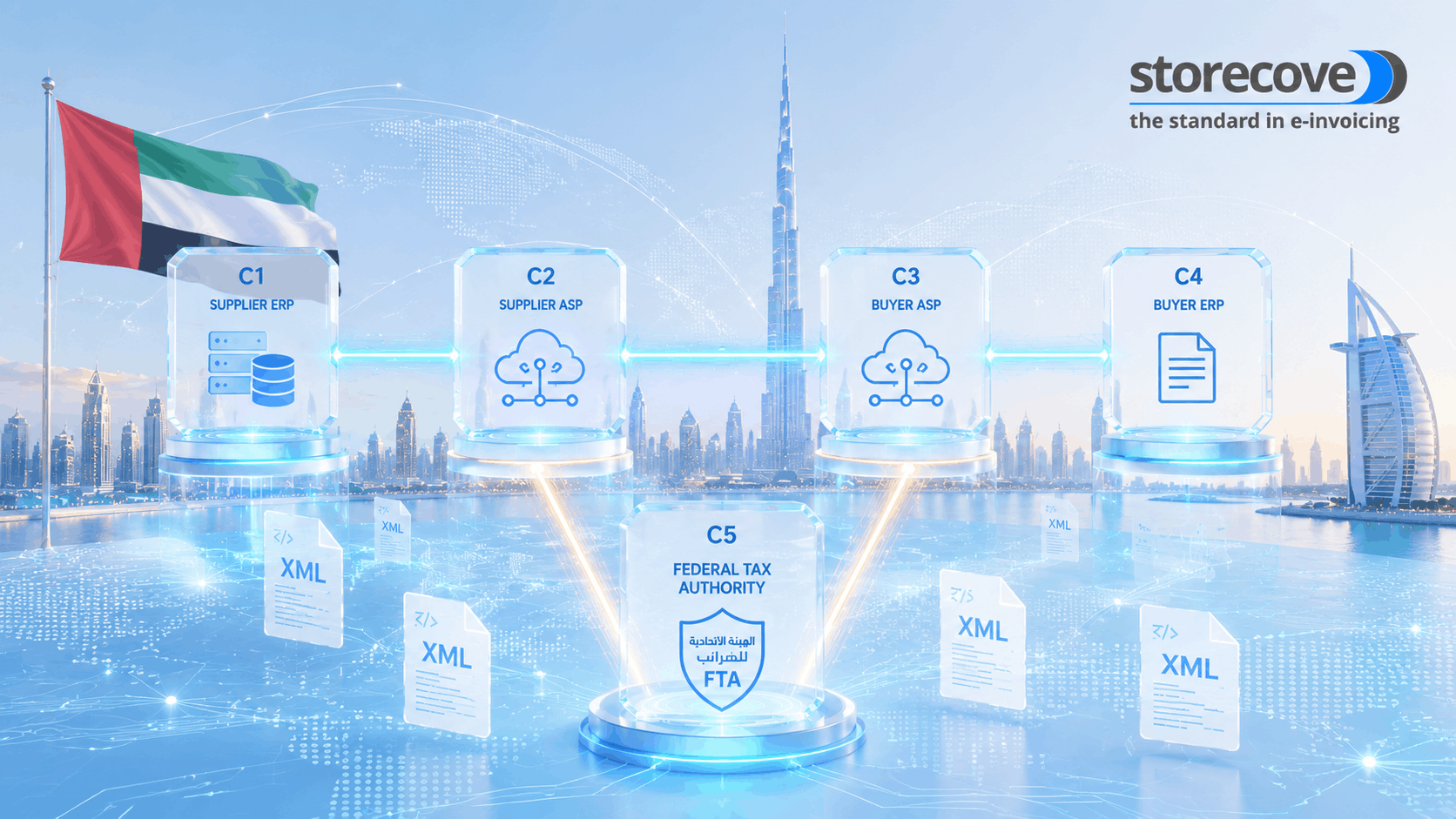

Comments