
As global e-invoicing continues to expand, developers are increasingly tasked with connecting ERP systems to the Peppol network. While this may appear to be a straightforward API integration, the reality is far more complex. Connecting to Peppol requires transforming internal invoice data, aligning with structured formats, and ensuring compliance with network standards across multiple jurisdictions.
For businesses operating internationally, Peppol API integration is not just about connectivity. It is about building a scalable foundation that supports long-term e-invoicing compliance without constant redevelopment.
What API Integration Looks Like in E-Invoicing
In an e-invoicing environment, API integration acts as the bridge between internal ERP systems and external networks. The ERP remains the system of record, generating invoice data based on internal processes. That data must then be transmitted in a structured, compliant format that can be understood by receiving systems.
Instead of connecting directly to every customer or tax authority, businesses connect to a network. This allows them to standardize how invoice data is exchanged while maintaining control over their internal systems.
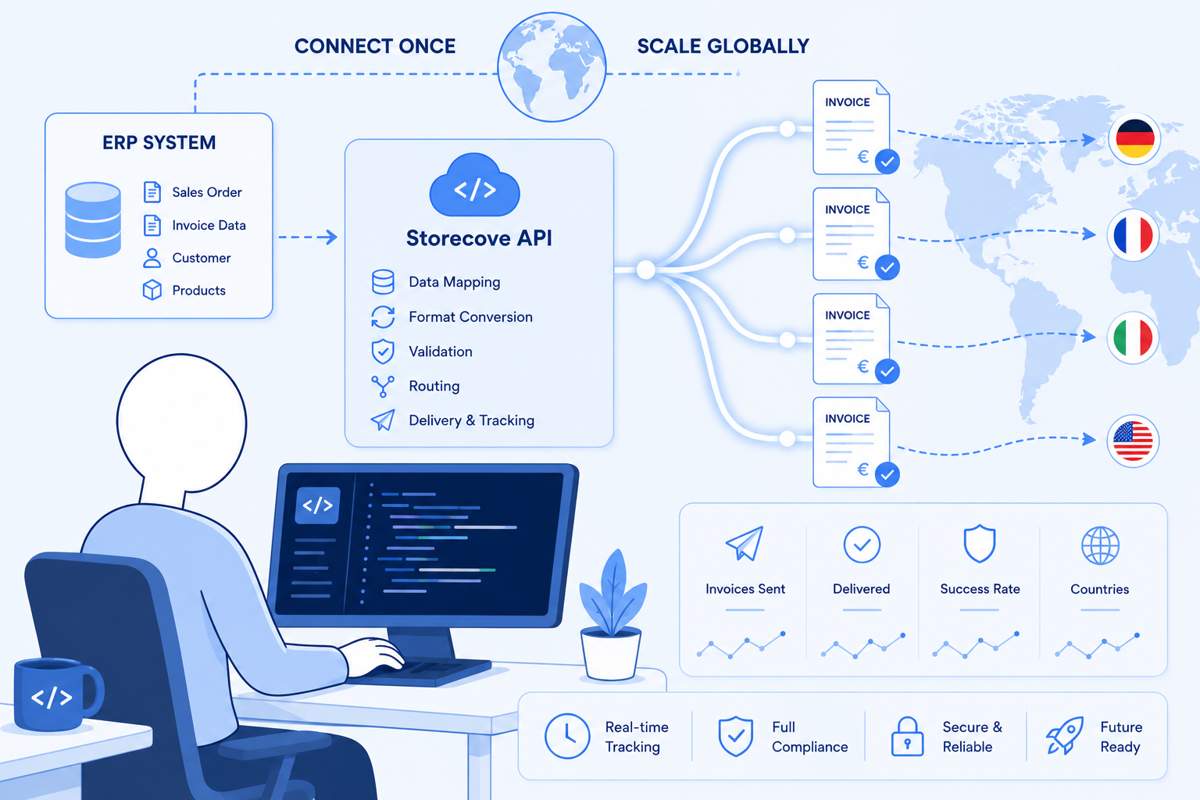
Connecting ERP Systems to a Global Network
When connecting an ERP system to a network like Peppol, developers typically work through an access point that manages communication between systems. The ERP sends invoice data to the API, which then processes and transmits it through the network to the intended recipient.
This model removes the need for direct integrations with each trading partner. Once connected, businesses can exchange invoices across multiple countries using a single connection, making it far more efficient to scale internationally.
Data Mapping and Format Conversion
One of the most important aspects of this integration is data mapping. ERP systems store invoice data in internal formats that do not match the structured formats required by e-invoicing networks. To ensure compatibility, this data must be mapped into standardized structures such as UBL or Peppol BIS. This process ensures that all necessary invoice details, including tax information, line items, and payment terms, are correctly aligned with network requirements.
After mapping, the data is converted into the required structured format and validated before transmission. This step is critical, as even minor inconsistencies can result in rejected invoices or compliance issues.
The Role of Access Points
Access points serve as gateways between ERP systems and the broader network. They are responsible for validating invoice data, ensuring compliance, and routing invoices to the correct recipient.
By using an access point, businesses can connect once and communicate with multiple trading partners across different countries. This significantly reduces the complexity of managing separate integrations and allows for more consistent data exchange.
Beyond One Network: The Shift Toward Interoperability
While Peppol provides a strong foundation for structured invoice exchange, the broader industry is moving toward interoperability across multiple digital networks.
Initiatives like the DBNAlliance are focused on enabling communication across different frameworks, creating a more connected global infrastructure. This allows businesses to operate beyond a single network and reduces the need for separate integrations as new systems and standards emerge. For developers, this represents a shift toward building flexible, future-ready integrations rather than ones tied to a single framework.
Why Scalable Integration Matters
E-invoicing requirements are constantly evolving, with new mandates, formats, and reporting rules being introduced across different regions. A one-time integration is no longer enough.
Developers need to build systems that can adapt to change without requiring continuous redevelopment. A scalable integration approach allows businesses to support new markets, maintain compliance, and handle increasing invoice volumes without adding complexity.
This is especially important for organizations operating across multiple jurisdictions where requirements can vary significantly.
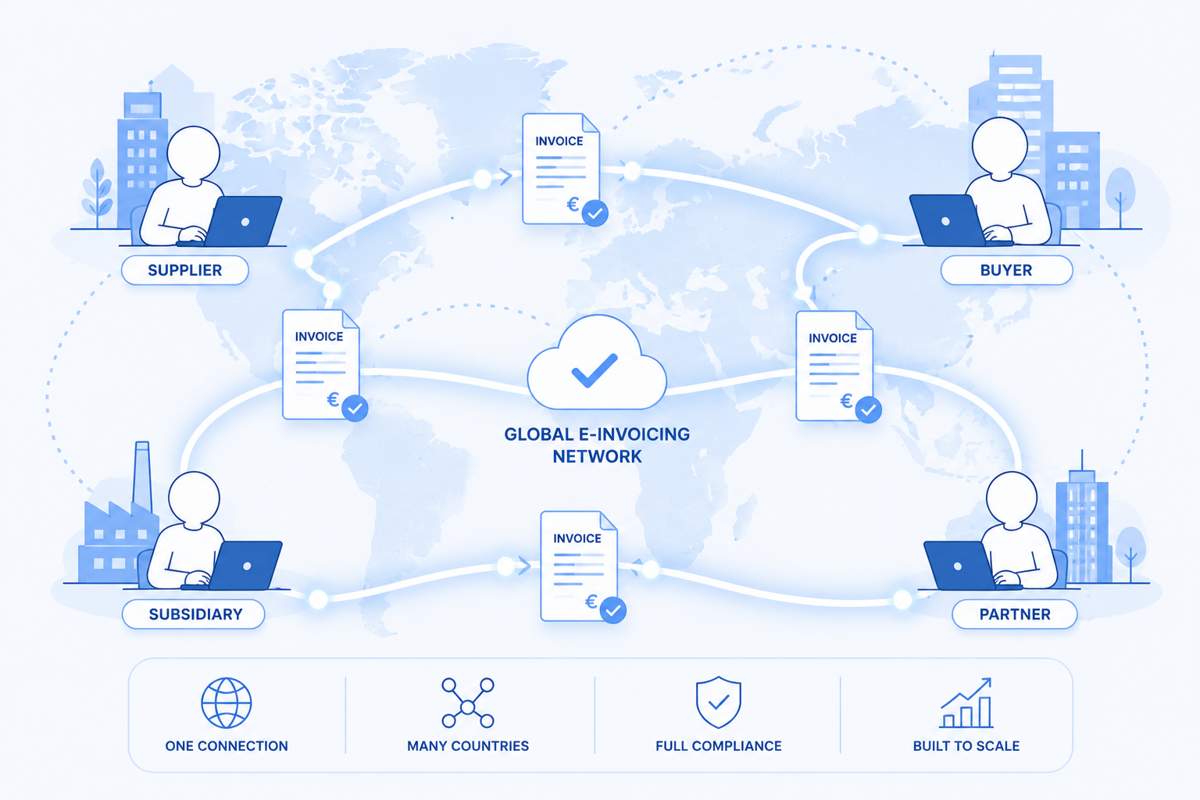
How Storecove Simplifies Integration
Storecove provides a developer-friendly API that simplifies how ERP systems connect to the Peppol network and beyond. Instead of requiring developers to manage data mapping, format conversion, validation, and routing separately, Storecove centralizes these processes into a single integration.
Through one API, businesses can connect to a certified access point, exchange structured invoices, and maintain compliance across multiple countries without rebuilding their systems.
Storecove also supports broader interoperability, aligning with initiatives like the DBNAlliance to enable connectivity across multiple digital networks. This allows organizations to future-proof their integrations and scale more efficiently as global requirements evolve.
Get Started
If you are exploring how to connect your ERP system to the Peppol network, Storecove offers a streamlined, scalable solution.
You can request a free test account to explore our API in a sandbox environment, or book a demo with our team to learn how we support modern e-invoicing integration.

Comments