
As e-invoicing requirements continue expanding across the globe, businesses are paying closer attention to the technology that supports compliance. New mandates are being introduced across Europe, Asia-Pacific, the Middle East, and North America, while existing frameworks continue to mature and evolve. At the same time, organizations are managing increasing expectations around interoperability, reporting, automation, and integration with existing business systems.
For many companies, the immediate focus is understandably on meeting regulatory requirements. Compliance deadlines, invoice formats, reporting obligations, and implementation timelines often dominate project discussions. Yet one of the most important decisions in an e-invoicing project is often the one that receives the least attention: selecting the underlying API infrastructure.
An e-invoicing API is far more than a technical connection. It becomes the foundation that determines how invoice data moves between systems, how new mandates are supported, how easily integrations can be maintained, and how efficiently organizations can expand into new markets. The right API can simplify compliance for years to come. The wrong one can create operational complexity that grows with every new requirement.
As governments continue to introduce digital tax initiatives and structured invoicing requirements, businesses are increasingly evaluating e-invoicing APIs not only from a compliance perspective but also from the standpoint of long-term scalability and operational efficiency.
What Is an E-Invoicing API and Why Does It Matter?
An e-invoicing API enables business systems to exchange invoice data electronically with external platforms, networks, customers, suppliers, and tax authorities. Rather than relying on manual uploads, email attachments, or individual country-specific connections, an API provides a structured way for systems to communicate automatically.
In practice, an e-invoicing API acts as the connection point between a company's ERP system and the networks, platforms, and authorities involved in invoice exchange. When an invoice is created, the API can validate required data, convert the document into the appropriate format, and route it to the correct destination. For example, an invoice generated in SAP or Oracle may need to be converted into a Peppol-compliant format, transmitted via a certified network, or submitted in accordance with country-specific requirements. By automating these processes, an e-invoicing API reduces manual work while helping businesses maintain consistency across different systems and compliance frameworks.
In practice, an e-invoicing API acts as the connection point between a company's ERP system and the networks, platforms, and authorities involved in invoice exchange. When an invoice is created, the API can validate required data, convert the document into the appropriate format, and route it to the correct destination. For example, an invoice generated in SAP or Oracle may need to be converted into a PEPPOL-compliant format, transmitted via a certified network, or submitted in accordance with country-specific requirements. By automating these processes, an e-invoicing API reduces manual work while helping businesses maintain consistency across different systems and compliance frameworks.
As these requirements become more sophisticated, businesses benefit from infrastructure that can support multiple processes through a centralized approach rather than relying on disconnected tools and manual workflows.
Why Businesses Are Looking Beyond Local Compliance Solutions
Historically, many organizations approached e-invoicing as a local compliance initiative. A mandate would be introduced in a specific country, and businesses would implement a solution designed to address that individual requirement.
While this approach may satisfy an immediate regulatory obligation, it can become increasingly difficult to manage as additional mandates emerge.
A company operating across multiple countries may eventually find itself maintaining separate integrations, different invoice formats, multiple reporting processes, and various local service providers. Each additional requirement introduces another layer of complexity for finance, compliance, and IT teams.

As a result, many organizations are taking a broader view of their e-invoicing strategy. Rather than implementing isolated solutions for each market, they are looking for infrastructure that supports multiple countries and regulatory frameworks through a single integration model.
This approach allows businesses to build consistency across operations while reducing the administrative burden associated with managing numerous local solutions.
The Importance of Interoperability
Interoperability has become one of the most important considerations when evaluating e-invoicing technology.
Businesses rarely exchange invoices within a single environment. Customers, suppliers, government authorities, and service providers often operate across different networks and platforms. Maintaining separate connections for each participant can create significant technical and operational overhead.
Interoperability addresses this challenge by enabling organizations to exchange information across multiple frameworks using standardized processes and connections.
Peppol has become one of the most widely recognized examples of this approach. Through its certified access point model, businesses can connect once and exchange documents with a large network of participants using common standards.
The broader principle extends beyond Peppol itself. Organizations increasingly want infrastructure that can support multiple networks, reporting frameworks, and future compliance requirements without extensive redevelopment whenever a new mandate is introduced.
When evaluating an e-invoicing API, interoperability indicates how effectively a solution can support future growth and regulatory expansion.
What To Look For When Evaluating an E-Invoicing API
Every organization has unique requirements, but several factors consistently play an important role when selecting an e-invoicing API.
Scalability is often one of the first considerations. A solution that works well for a single entity or market should also support additional business units, countries, invoice volumes, and compliance requirements as operations grow. Businesses benefit from infrastructure that can evolve alongside their organization rather than requiring major redevelopment every few years.
What To Look For When Evaluating an E-Invoicing API
Every organization has unique requirements, but several factors consistently play an important role when selecting an e-invoicing API.
Scalability is often one of the first considerations. A solution that works well for a single entity or market should also support additional business units, countries, invoice volumes, and compliance requirements as operations grow. Businesses benefit from infrastructure that can evolve alongside their organization rather than requiring major redevelopment every few years.
Developer experience is equally important. Integration projects move faster when APIs are supported by clear documentation, comprehensive testing environments, implementation resources, and predictable behavior. Development teams should be able to focus on building business value rather than spending unnecessary time navigating technical obstacles.
Compliance management is another critical consideration. Regulatory requirements continue to evolve, and organizations benefit from providers that actively maintain support for changing formats, reporting obligations, validation rules, and technical specifications. This reduces the amount of ongoing monitoring and maintenance required from internal teams.
Visibility also plays a significant role in successful implementations. Finance and operations teams need insight into invoice statuses, validation outcomes, delivery confirmations, and reporting activities. Access to this information improves transparency and supports more efficient troubleshooting when issues arise.
Finally, organizations should evaluate the range of connectivity a provider offers. As global mandates grow, companies increasingly appreciate infrastructure that enables support across various countries, networks, and interoperability frameworks via a single, centralized platform.
Storecove's E-Invoicing API Capabilities
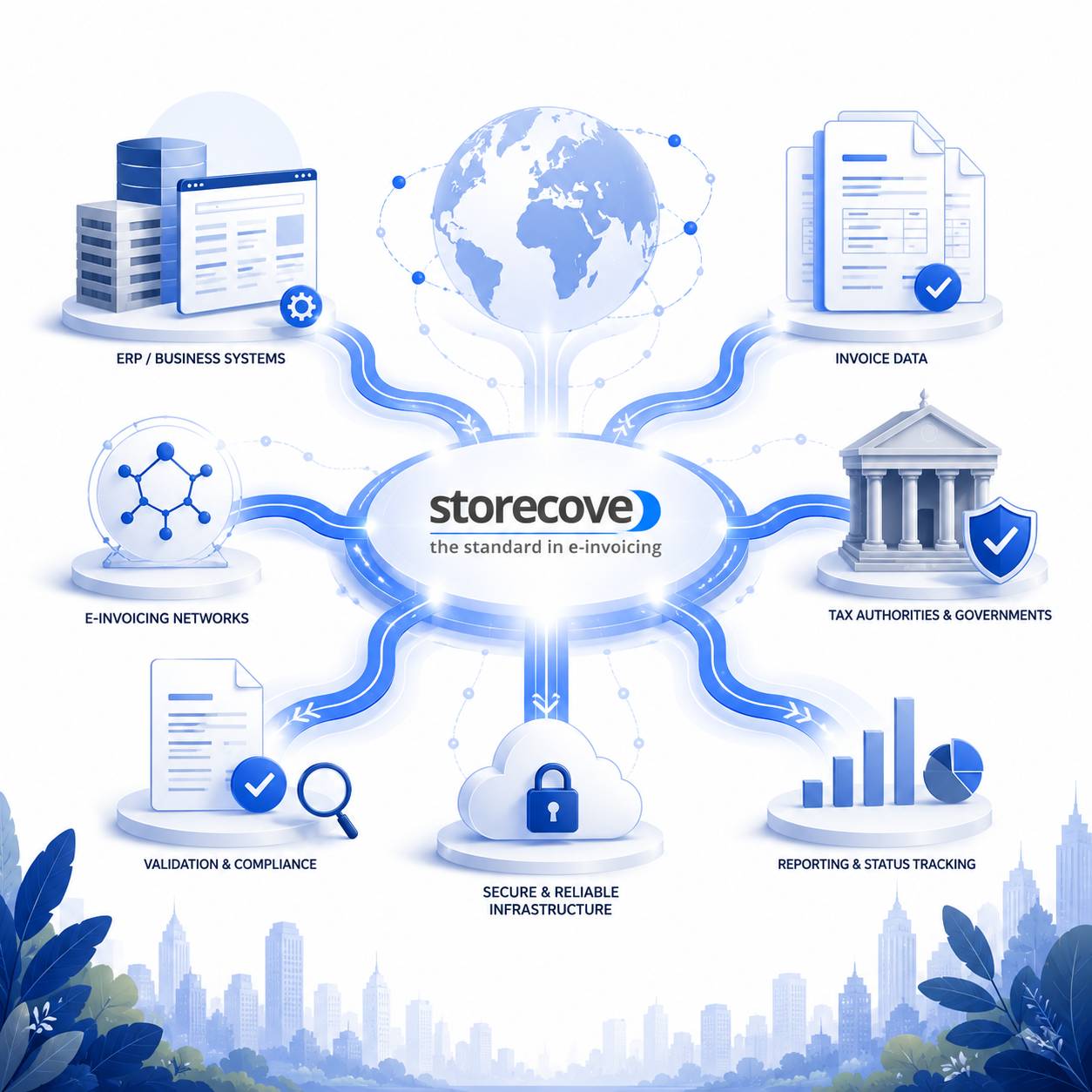
Storecove's e-invoicing API was designed to help businesses manage global compliance through a single integration.
Rather than maintaining separate connections for different countries and networks, organizations can connect once and access a platform that supports invoice exchange, interoperability, reporting workflows, and compliance requirements across multiple jurisdictions.
The platform handles document validation, format conversion, routing, and network connectivity, while providing businesses with the flexibility to support diverse operational models and regulatory environments.
Storecove supports organizations ranging from software providers and systems integrators to multinational enterprises managing complex invoicing requirements across multiple regions. Through one API, businesses can connect ERP systems and financial platforms to a growing ecosystem of e-invoicing networks and compliance frameworks.
As governments continue expanding digital reporting initiatives and structured invoicing requirements, this centralized approach helps organizations reduce complexity while maintaining the flexibility required for future growth.
Talk to Our Team About E-Invoicing API Integration
Selecting an e-invoicing API is ultimately about more than compliance. It is a decision that influences how efficiently systems communicate, how easily new requirements can be supported, and how effectively organizations can scale their operations over time.
Businesses evaluating providers should consider not only today's requirements but also the realities of future expansion, evolving mandates, and increasing interoperability expectations.
Storecove helps organizations build scalable e-invoicing infrastructure through a single API designed for global compliance and connectivity. If your team is evaluating e-invoicing solutions or planning a new integration project, contact our team to learn how Storecove can support your implementation strategy.
Read More
 Lauren Kelly
 Lauren Kelly
 Lauren Kelly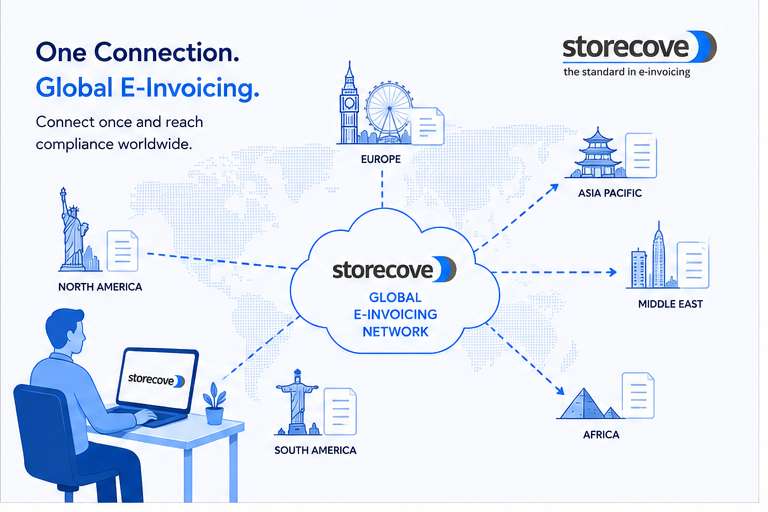

Comments